The Euclid Space Telescope is an astronomical mission launched by the European Space Agency (ESA) in July 2023, designed to map the geometry of the “dark universe”. Operating from the Second Sun-Earth Lagrangian point (L2), Euclid’s primary goal is to investigate cosmic expansion, the distribution of dark matter, and the nature of dark energy by imaging billions of galaxies across more than one-third of the entire sky.
Why is Euclid called a “Wide-Angle” Telescope?
Unlike the James Webb Space Telescope (JWST) or Hubble, which look very deeply at small, highly specific patches of the universe, Euclid is a survey telescope.
- Field of View: Euclid features an exceptional 45×45 arc-minute field of view. This makes its snapshot capability 100 times larger than JWST’s and 200 times larger than Hubble’s.
- Efficiency: A mosaic that would take ground-based observatories or Hubble thousands of hours to piece together can be cleanly stitched by Euclid in a single day. For example, in 2026, Euclid completed a 6-Gigapixel Masterpiece of the Milky Way’s heart in just 26 hours.
- The Cosmic Map: Over its planned six-year mission, Euclid is scanning 14,000 square degrees of the sky to construct a massive, three-dimensional cosmic atlas spanning 10 billion years of cosmic history.
Related posts:
 The Hubble Space Telescope’s best images of the planets and other celestial bodies of our Solar System
 The Hubble Space Telescope’s best images of the planets and other celestial bodies of our Solar System
 Nancy Grace Roman telescope
 YouTube Channel Artwork
 Space Streams IRC Chat
 NASA Progresses Toward Artemis II Moon Mission
 Hubble Seeks Clusters in ‘Lost Galaxy’
 Space Chat Podcast
 Space Streams Documentaries YouTube Live Stream
 Vera Rubin Telescope
 European Space Agency (ESA)
 Artemis II
 Gemini North telescope
 3I/ATLAS
 How to disable XP participation on YouTube chat
 Space Streams – Observing Earth [Ambient] Live Stream
 Andromeda Galaxy
![Space Streams - Nebula [Ambient] image](https://space-streams.com/wp-content/uploads/2024/11/space-streams-nebula-150x150.png) Space Streams – Nebula [Ambient] YouTube Live Stream
Space Streams – Nebula [Ambient] YouTube Live Stream
 NGC 3627
 Cassiopeia A
 NASA Unburies Danger Zones of Star Cluster
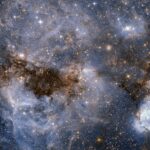 Into the storm
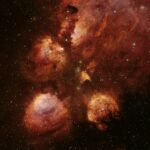 NGC 6334, The Cat’s Paw Nebula
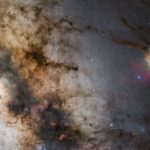 A 340-million pixel starscape from Paranal
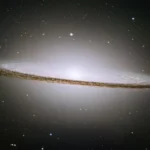 Sombrero Galaxy M104
 NASA Releases Hubble Image Taken in New Pointing Mode
 A Virgo cluster galaxy
 Get involved
 NGC 1672
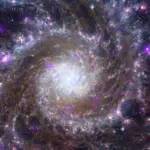 M74
M74
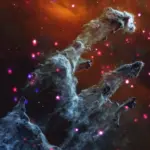 The Eagle Nebula
 Christmas Tree Galaxy Cluster
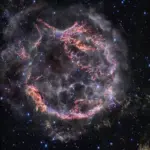 Cassiopeia A (NIRCam)
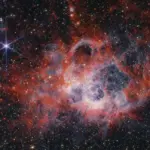 NGC 604
 Top of the Horsehead Nebula
 Serpens Nebula
 NGC 4151: An Active Black Hole in the “Eye of Sauron”
 Chandra telescope star cluster insight
 Chandra telescope: A pair of colliding spiral galaxies
 Hubble Tangos with a Dancer in Dorado
 PIA03606: Most Detailed Image of the Crab Nebula
 WFC3 visible image of the Carina Nebula
 Westerlund 2 – Hubble’s 25th anniversary image
 Mystic Mountain in Infrared
 Mystic mountains visible light
 The Milky Way
 Pleiades
 Horsehead Nebula
 Hubble Space Telescope
 Chandra X-ray Observatory